Improved T-cell immunotherapy research for better cancer treatments.
AI, organoids, and automated cell culture are providing unprecedented insights into tumor immunity and responses to therapy.
Discover novel solutions to long-standing CAR T-cell immunotherapy cancer research challenges—including accurately modeling the tumor microenvironment and analyzing complex datasets—that pave the way for more effective and personalized treatments.
Get Quantitative Data from Relevant Cancer Models
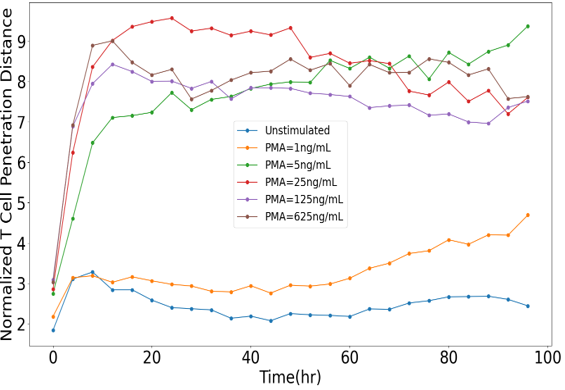
Accurately modeling the tumor microenvironment (TME) is crucial for T-cell immunotherapy. Unfortunately, traditional 2D models are incapable of accurately modeling the TME. By combining human-relevant, 3D models with quantitative measurement techniques, researchers can reliably generate insights into T-cell penetration and efficacy to better understand immunotherapy efficacy.
Mitigate Cytokine Release Effects
Cytokine Release Syndrome (CRS) is a significant side effect of T-cell therapy, potentially leading to severe inflammatory responses. As such, it’s invaluable to know whether a given T-cell therapy will have cytotoxic effects in vivo. Novel advanced detection methods identify inflammatory cytokines at picogram levels to help predict and mitigate cytotoxic effects.
Get Deeper, More Robust Insights Quickly
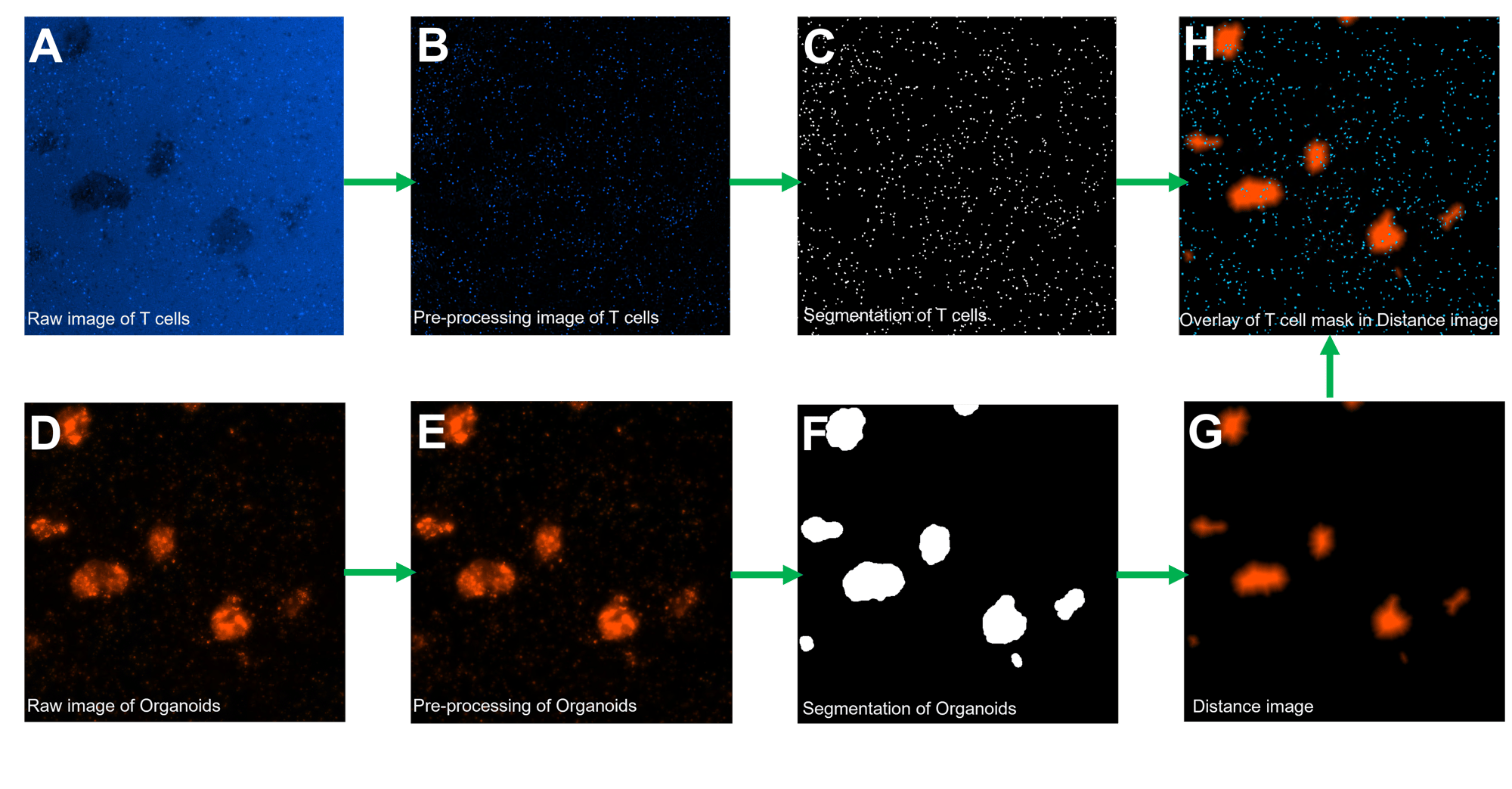
Manual analysis of large, complex datasets from 3D cancer models is slow and prone to errors. User-friendly AI-powered segmentation accelerates data generation and improves analysis accuracy. Researchers can quickly classify thousands of cancer organoids by morphology to get deeper insights into the therapeutic potential of a given immunotherapy.
Get to Clinical Trials Sooner

Scale up immunotherapy screening and get to clinical trials sooner with patient-derived organoids (PDOs). Using standardized, assay-ready PDOs, researchers can test larger T cell-based screens quicker and obtain robust data sooner. By combining human-relevant models with streamlined workflows, your lab can speed the process of getting treatments to clinical trials.
Cancer Immunotherapy T-Cell Workflow
.jpg?width=2000&height=929&name=Cell%20and%20CRC%20PDO%20Workflow(1).jpg "Cell and CRC PDO Workflow")
- Scale up complex cell culture workflows with actionable imaging and validated turn-key protocols for reliable organoid feeding, monitoring, and passaging on up to 40 plates.
- Get to clinical trials faster by easily identifying outliers at the well, plate, or experiment level to help detect variability. Save reagents by removing these plates or wells from downstream processing early in the drug discovery process.
- Improve productivity and optimize hands-on time with image-based, deep-learning decision-making. Real-time feedback alerts users to milestones or events and can generate automated tasks to resolve them.
- Develop traceable and reproducible cell cultures specific to your desired assay endpoint with a unified software environment using data-driven visualization tools.

The CellXpress™ Automated Cell Culture System is an approachable, truly hands-off automated solution built by scientists, for scientists, so you never have to worry about missing a feeding or passaging step. Watch this in-depth demo, presented by Dr. Serena Cervantes, that gives a detailed walkthrough of the system and its software. Then speak with an expert to discuss how your lab can integrate AI-driven, automated 2D and 3D cell culture processes to make disease modeling and drug screening workflows more reliable and reproducible.
ABOUT US
We're a trusted life sciences partner to researchers around the world