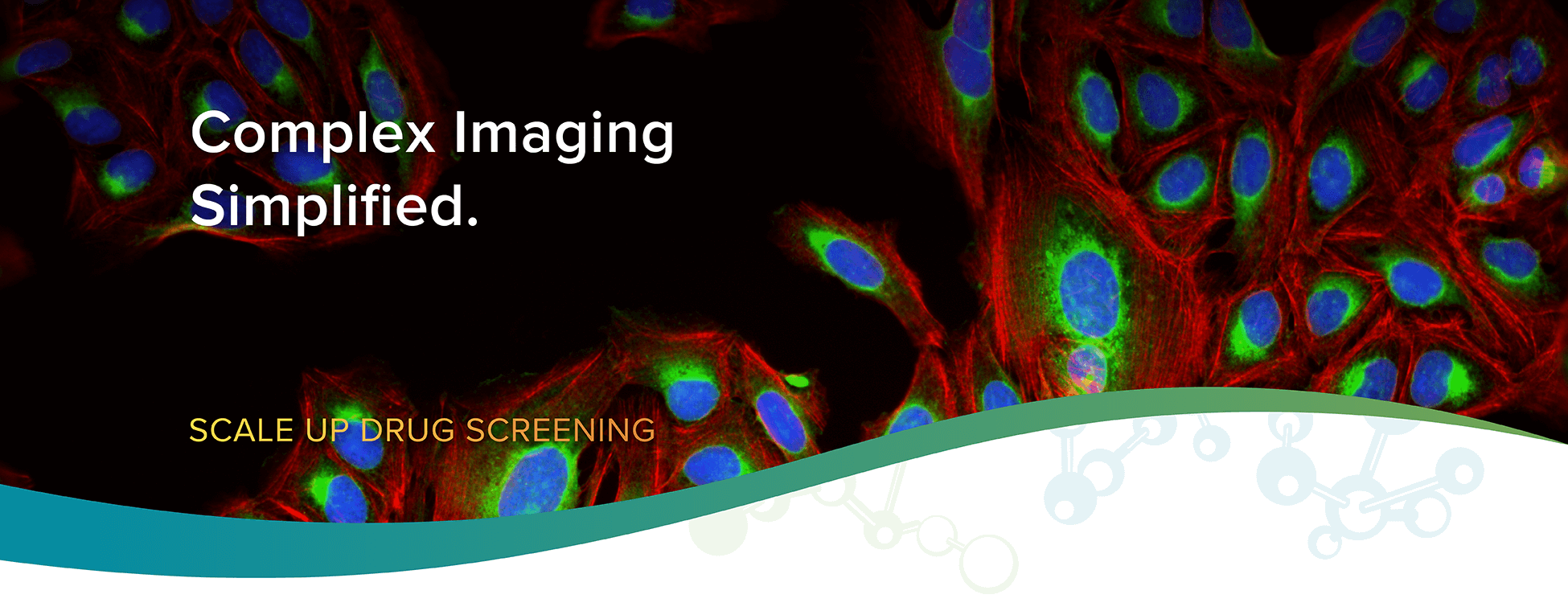
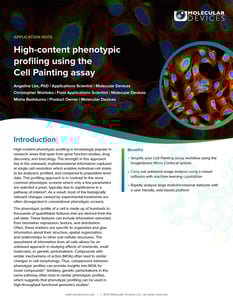
The Cell Painting assay is very data rich and highly multiplexed, increasing the opportunity for novel discoveries. Hundreds or even thousands of measurements per cell can be obtained using this technique.
Read the application note to learn how to simplify the cell painting assay and enable rapid data analysis for high-content phenotypic profiling.
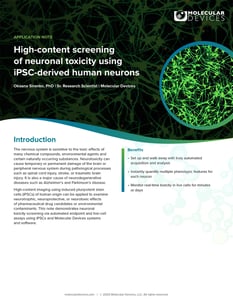
Neurite outgrowth is a commonly used assay to study neuronal development and neuronal degeneration in vitro. The growth of neurites can be stimulated or inhibited by neurotrophic factors. Importantly, the development of neurons can be affected by neurotoxic chemicals.
Read the application note to learn how high-content screening of neuronal toxicity using iPSC-derived human neurons can be used to quantify the effects of neurotoxic and neuroactive compounds on neurons using multiple parameters.
Live cell imaging is a fundamental research tool in cell biology labs. Label-free cell analysis provides a better alternative to using fluorescent dyes as it enables scientists to image live cells under near-native conditions – examining biological processes without the adverse effect of using genetic modification or reagents to label and fix the cells.
Read the application note to learn how creating custom deep-learning models can generate robust segmentation of label-free biological models.

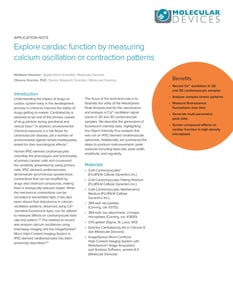
Cardiotoxicity is a major cause of drug attrition and environmental health risk and human iPSC-derived cardiomyocytes are a biologically relevant model to study the effects of drugs and chemicals on the cardiac system. By measuring calcium oscillation patterns, we can get additional insights into the likely effects of compounds on cardiac tissue.
Read this app note to explore the method and utility of using high-content imaging to record and analyze calcium oscillation patterns in 2D and 3D cardiomyocyte samples.