270,000+
CITATIONS ACROSS OUR
PORTFOLIO
PORTFOLIO

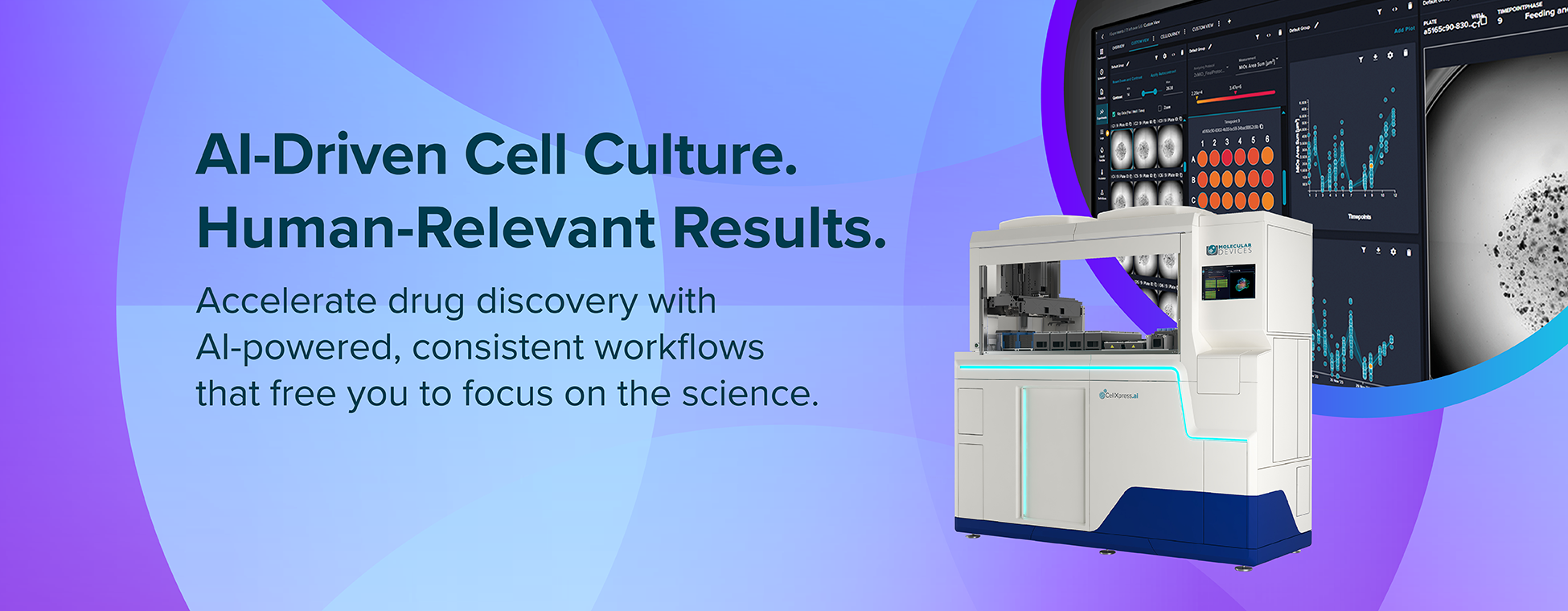
Busy labs face mounting pressure to accelerate drug discovery, reduce costs, and deliver reproducible results, all while managing increasingly complex cell models. Manual workflows can’t keep pace.
The CellXpress.ai® Automated Cell Culture System is an AI-driven, automated cell culture solution that streamlines workflows, improves assay reliability, and enhances reproducibility while freeing researchers to focus on their science - ultimately accelerating drug discovery and ensuring therapeutics reach the market faster.
It gives your team total control, visibility, and traceability across the entire cell journey while maintaining hands-off 24/7 operations for growing and scaling multiple PDO/iPSC cell lines, spheroids, or organoids.
Scale up with confidence: Expand complex workflows, including brain organoids, with validated, turnkey protocols for feeding, monitoring, and passaging up to 100 plates across multiple cell lines in parallel*. Boost organoid production by up to 25X**, enabling large-scale studies without compromising quality.
Free your team to focus on science: Save approximately 200 hours*** of manual labor per week with autonomous feeding, monitoring, and passaging - even on weekends.
Reduce variability and risk: Standardize workflows and minimize contamination with AI-powered decision-making and image-based monitoring for reproducible results. Get fully traceable, reproducible cell cultures.
Accelerate drug discovery timelines: Reach clinical trials faster and prevent late stage failures with reproducible, traceable and robust culturing of physiologically relevant cell models.

The CellXpress system is an approachable, truly hands-off automated solution built by scientists, for scientists, so you never have to worry about missing a feeding or passaging step. Watch this in-depth demo, presented by Dr. Serena Cervantes, that gives a detailed walkthrough of the system and its software. Then speak with an expert to discuss how your lab can integrate AI-driven, automated 2D and 3D cell culture processes to make disease modeling and drug screening workflows more reliable and reproducible.
Brain organoids: For neuroscience, neurotoxicity, modeling neurodevelopmental and neurodegenerative diseases, and accelerating the discovery of new therapeutics.
Colorectal Cancer Organoids: Biologically relevant CRC PDOs can exhibit drug responses similar to that of patients, pointing to their value in predicting the efficacy of novel therapeutics.